
Insights
What we are reading, writing, watching and arguing about. Our newsletters, reports, blog posts and the work we do beyond client briefs.
Blog & Newsletters









Reports.

INTELLIGENCE REPORT

INFLUENCER REPORT
WOMEN IN MARKETING
Get great content in your inbox
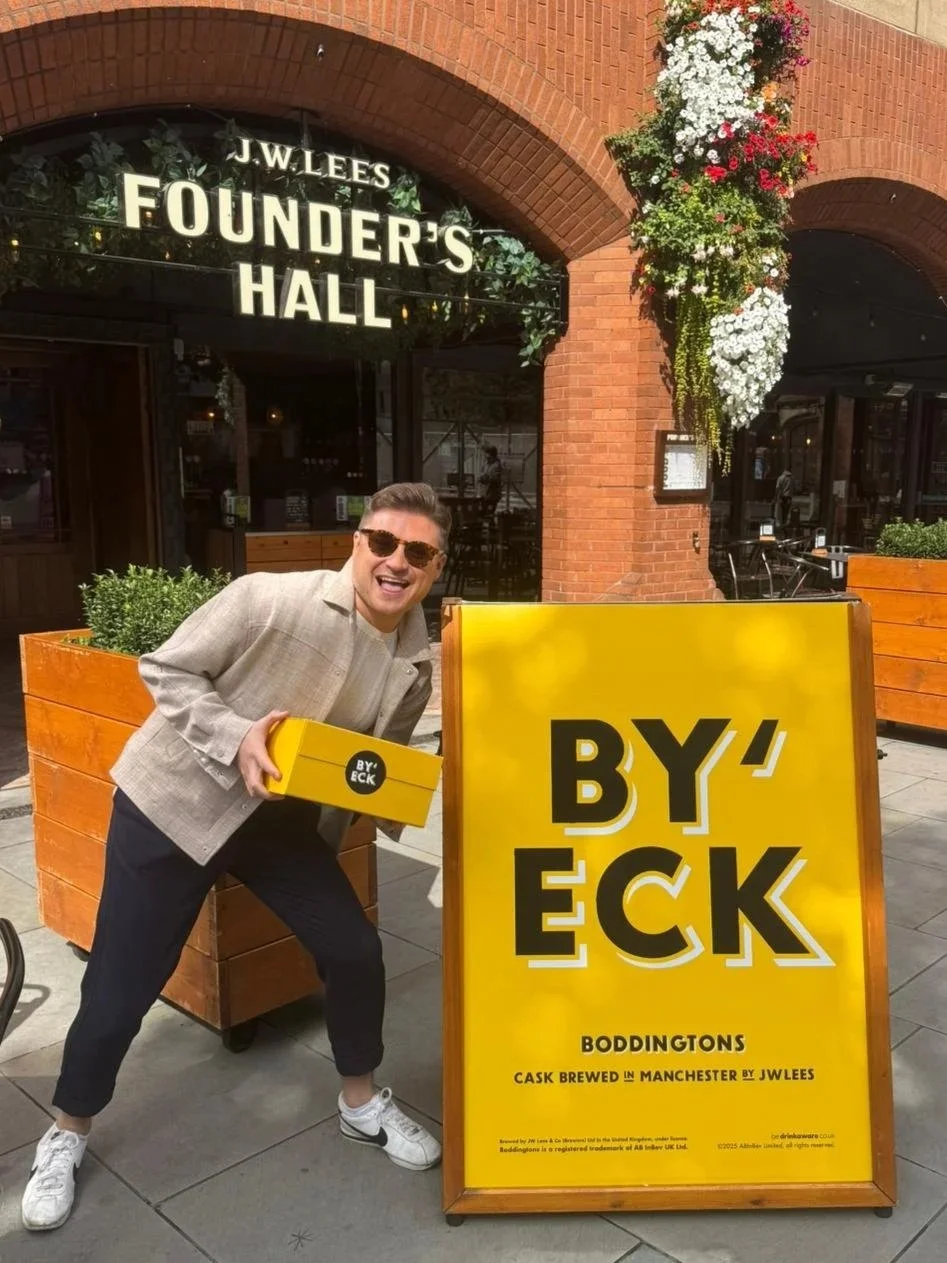
WE'RE BACK WITH JW LEES, AND BRINGING BODDINGTONS WITH US!
JW Lees, Manchester’s oldest brewery, has appointed us to lead PR for both JW Lees and Boddingtons Cask. It’s a brand we know well, having helped relaunch Boddingtons to the city last year. Here’s why this one matters to us.

Manchester's oldest brewery has appointed Down at the Social to lead PR for both JW Lees and Boddingtons Cask.
Some brands you work with once. Some you keep coming back to. JW Lees is firmly in the second camp, and we couldn't be happier to say we're working with Manchester's oldest brewery again.
JW Lees has been family-run since 1828, when John Lees first started brewing in Middleton. Seven generations later, the brewery runs a portfolio of 138 pubs and pub partners stretching from Manchester to Wales. That's a lot of history to do justice to, and it's exactly the kind of brand we love getting our teeth into: deeply rooted, genuinely local, and with a story worth telling properly.
This isn't our first time round with the team. Back in 2025, we helped relaunch Boddingtons Cask, bringing the ale back to Manchester after more than 13 years away from the city.
The results spoke for themselves: a PR reach of over 120 million, 32 pieces of national and regional coverage and most importantly sold out casks week in and week out. More than numbers on a report, though, it was a homecoming, and the whole country came along for the ride.
This time, we're taking on PR for both JW Lees and Boddingtons Cask: press office, reactive commentary, and activations. We've not hung about, either. In the past few weeks we've already delivered the St. Patrick's Day campaign for JW Lees Stout and the Boddingtons x The Black Friar partnership.
“We couldn't be happier to be working alongside Down at the Social again. Our long-standing relationship with the team means they truly understand our brand and we trust them to tell our story.”
William Lees-Jones, Managing Director, JW Lees
For us, this one's personal. We've always loved working with brands woven into the fabric of Manchester, and JW Lees is about as Manchester as it gets. We know the team, we know the brand, and we know what good looks like for them. Now we get to spend the year proving it all over again.
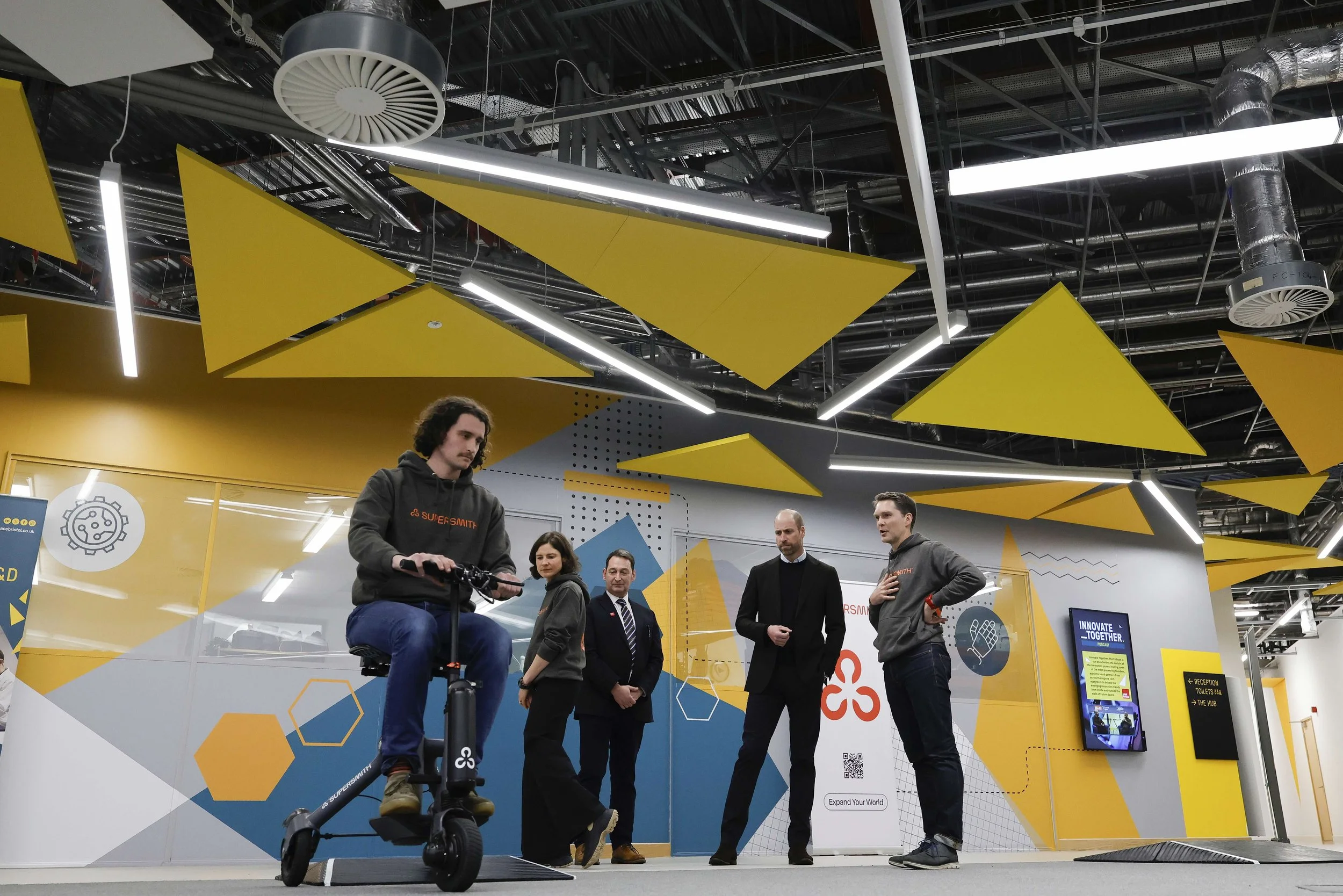
Down at the Social appointed by Supersmith to lead PR for the 3Scooter launch
Supersmith is rebuilding mobility scooters from the ground up. We're delivering the PR and social to match. Here's why this brand is one to watch.
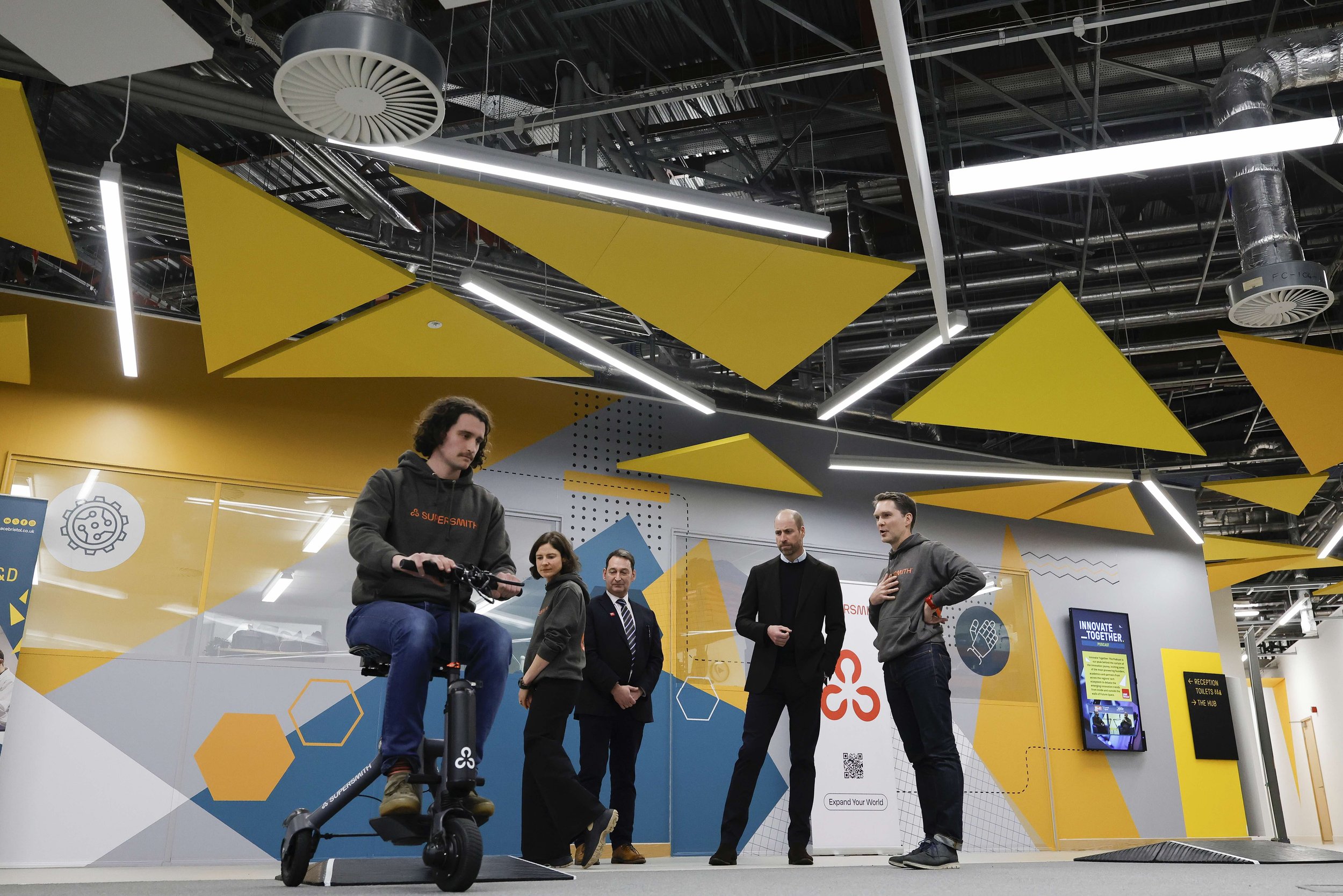
Credit: Andrew Parsons, Kensington Palace
Some clients walk through the door and you know immediately. Supersmith is one of them.
We've been appointed to deliver Supersmith's 2026 PR and social media programme, built around the launch of its groundbreaking 3Scooter. It's the kind of brief that reminds us exactly why we do this job, and why at Down at the Social we love to work with newsworthy brands and purpose driven businesses. It’s fantastic that Supersmith is both!
How to know if you're a newsworthy brand
We use the term "newsworthy brand" a lot, so it's worth being clear about what we mean.
A newsworthy brand isn't a business pumping out announcements every fortnight hoping something lands. It's a business with something genuinely worth talking about, and in our experience, that usually shows up in one or more of three ways.
You're launching something new or category-redefining. A product that's better engineered, smarter designed, or solving a problem the market hasn't cracked yet. New tech, new format, new approach. Perhaps even a whole new category.
There's a real story behind the business. Founders with a reason. A market they saw failing. A problem they're personally invested in solving. The "why" is as compelling as the "what."
You've got a point of view. You're not afraid to say what you think about your industry, your customers, or where the world is heading. You stand for something.
If you're nodding along to any of those, you're probably a newsworthy brand. If you're nodding along to all three, we should probably be talking.
Supersmith ticks every box.
What makes Supersmith newsworthy
Supersmith is rebuilding mobility scooters from the ground up. The 3Scooter uses F1-inspired EverLevel™ stability technology, engineering that has nothing to do with how mobility scooters have looked or worked for the last forty years. It's faster, safer, smarter, and importantly to its founders, it looks brilliant.
But the technology is only half of it. The founders built this because they saw, up close, how badly the existing market was serving real people. That purpose runs through every part of the business, from the design process (where their ambassadors, all mobility scooter users, have shaped the product itself) to the ambition to change how the world thinks about mobility altogether.
New product. Real story. Strong point of view. Three for three.
What we're doing for Supersmith
Our remit covers the full press office function, proactive media relations, thought leadership, and reactive commentary across national, local and trade media. We'll be building on momentum already in motion, kicking off with the recent visit of the Prince of Wales to Supersmith's Bristol HQ, and giving the 3Scooter the platform a product like this deserves.
Alongside the PR programme, we're running organic social content and an influencer campaign designed to engage prospective users, tech experts and medical professionals. The Supersmith ambassador network, every one of them with a personal story that brings the everyday reality of mobility to life, sits at the heart of how we'll tell this story.
What this partnership is really about
Tom Morgan, co-founder of Supersmith, put it best: this partnership is about more than coverage. It's about changing perceptions. Reframing how the world sees mobility scooters. Using digital-first, impactful PR to drive real change.
That's the brief, and that's the work we're built for.
Looking for a content-led PR agency for your product launch?
Down at the Social is a content-led PR and social media agency working with innovative, purpose-led brands across the UK. Founded in Manchester, working nationally.
If you're launching something new, building a brand with real purpose, or finally ready to put your story in front of the people who need to hear it, that's our territory.
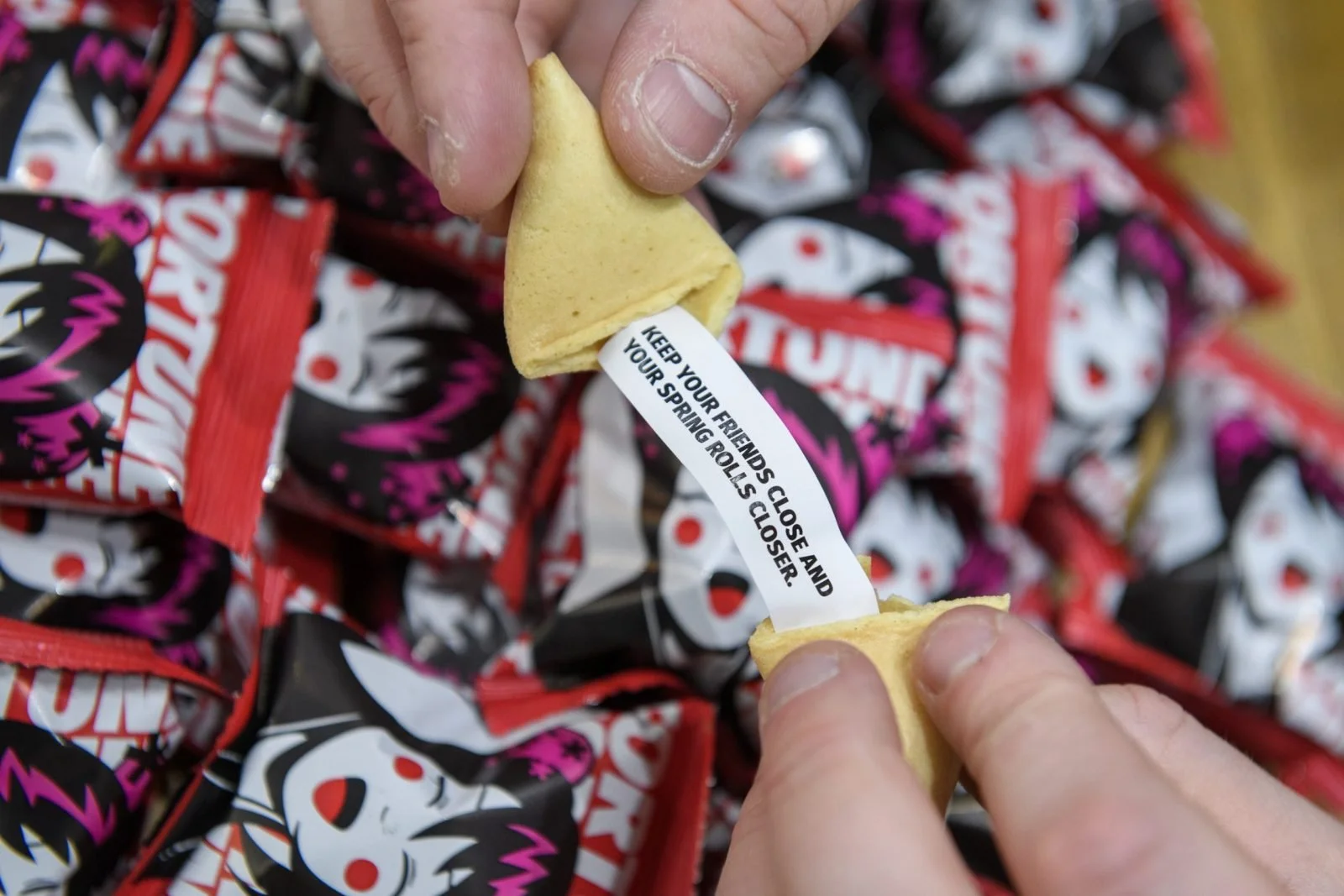
How To Make A Hospitality Promotion Actually Matter
Free food isn’t a strategy — but it can be a growth lever. Here’s how hospitality brands can turn seasonal promotions into national coverage, real footfall and long-term brand positioning.
Free Food Is Never Just Free Food
In hospitality, promotions are everywhere.
2-for-1s.
25% off.
Kids eat free.
Flash discounts in February when it’s quiet.
Most of them quietly erode margin without building brand.
But when done properly, a promotion can deliver:
Daytime national TV coverage
Tabloid headlines
Blanket regional media
Influencer amplification
Search demand
Physical queues
We’ve just delivered exactly that for Chopstix with a Chinese New Year campaign and it’s a perfect example of what separates strategic promotions from desperate discounting.
Why Most Hospitality Promotions Don’t Work
The problem isn’t giving something away.
The problem is how brands do it.
Most promotions are:
Reactive
Short-term
Built purely for footfall
Too small to matter
Disconnected from culture
They generate a short spike in sales and then disappear.
Worse, they train customers to wait for the next deal.
What Makes a Promotion Worth Running?
Here’s what made the Chopstix campaign different.
1. It Was Tied to a Cultural Moment
Chinese New Year isn’t arbitrary.
It’s:
Timely
Relevant
Searchable
Already part of the national conversation
That context turns an offer into a story. Without context, a promotion is just a transaction. With context, it becomes culturally aligned brand activity.
2. It Was Big Enough to Create Noise
200 free small boxes in every store.
Not 10. Not a single location. Not an underwhelming mechanic.
Scale creates visibility. Visibility creates coverage. If it doesn’t create tension, urgency or scale — it won’t create conversation.
Small promotions protect margin but rarely build brand. Strategic scale builds both.
3. It Was Built for PR, Not Just Sales
This is where most brands fall short.
They launch an offer and post it on Instagram.
The campaign was built with media in mind from day one.
That meant:
Securing This Morning with The Coupon King
Landing coverage in The Sun
Driving regional press across the UK
Integrating influencers
Now the giveaway isn’t just a cost centre.
It’s a content engine. A media hook. A national conversation starter.
The Commercial Case for Smarter Promotions
When done properly, promotions should drive:
Footfall
Brand visibility
Media coverage
Influencer reach
Retail buzz
Long-term brand positioning
In this case, Chopstix isn’t just discounting in February. They’re part of Chinese New Year.
That positioning matters.
The Unfiltered Truth
Promotion fatigue is real. But the solution isn’t fewer promotions - it’s smarter ones.
If your campaign isn’t:
Relevant
Timely
Newsworthy
Big enough to matter
Built for amplification
Rare
It probably isn’t worth running. And if a journalist wouldn’t cover it, you should ask why.
Want to Build Campaigns That Drive People to Places?
At Down at the Social, we combine intelligence, ideas and influence to drive impact.
We don’t just create offers.
We create moments.
If you want your next promotion to do more than erode margin, get in touch.
Your Business Is Sitting on Headlines. You’re Just Not Looking at Them.
Most brands overlook one of their most powerful PR tools: their own data. Discover how to turn internal sales, booking and behavioural insights into newsworthy stories that secure national media coverage.

How to Use Your Own Business Data to Generate PR and National Press Coverage
Most brands think they need a big campaign idea to generate national press coverage.
They don’t.
Some of the strongest PR stories don’t come from brainstorms. They come from something far simpler: paying attention.
Inside almost every business is a live feed of behavioural insight. What customers are buying. What they’re abandoning. What they’re returning. When they surge. When they disappear.
And when you look at that data through a storytelling lens, it often reveals something much bigger than your brand.
It reveals how people are living right now.
The Untapped PR Goldmine: Your Own Data
Brands frequently commission research to “create” news.
But many are already sitting on something more powerful - real-world behavioural data.
Your order history.
Your bookings.
Your enquiries.
Your search trends.
Your cancellations.
Your complaints.
This isn’t hypothetical. It’s not opinion-based. It’s action.
And action tells the truth.
For example:
A sudden cold snap hits and outdoor clothing sales quietly spike.
England goes on a strong tournament run and BBQ food, beer and garden equipment start selling out.
A British athlete performs well at the Winter Olympics and bookings for snow sports lessons increase alongside search demand.
None of these start life as PR campaigns.
They start as patterns.
But those patterns reflect national mood, optimism, seasonality, celebration, caution, indulgence — and that’s what makes them newsworthy.
When Data Becomes a Headline
Data becomes media-worthy when it stops being about your business and starts being about people.
Journalists are looking for signals. They care about:
Change - What’s up? What’s down? What’s shifting?
Contrast - What’s happening versus what we expected to happen?
Timing - Why does this matter now?
Scale - Does this reflect something bigger than one company?
When your numbers highlight a behavioural shift that mirrors broader society, you’re no longer pitching a product.
You’re offering insight.
That’s the difference between coverage and silence.
Why This Works in 2026’s Media Landscape
Newsrooms are leaner than ever. Journalists need:
Credible data
Timely angles
Evidence-backed commentary
Stories that connect to real life
Brands that can provide real behavioural insight - responsibly and accurately - become valuable sources.
And that builds long-term media relationships, not just one-off coverage.
A Simple Framework: Turning Internal Data Into PR
Before you commission research or brief your creative team, try this first.
Ask:
What surprised us this month?
What didn’t behave how we expected?
What dropped off faster than planned?
What quietly overperformed?
What does this say about people right now?
If you can answer those questions, there’s likely a story already forming.
The job of good PR isn’t always to invent something new.
Sometimes it’s to spot what’s already happening and frame it correctly.
From Intelligence to Impact
At Down at the Social, we believe the strongest campaigns start with intelligence. Ideas come second. Influence follows.
When you combine behavioural data with strong narrative framing, you don’t just get attention, you get relevance.
And relevance is what drives reach, credibility and ultimately commercial impact.
Sitting on Something Interesting?
If you’re noticing unusual patterns in your sales, bookings, customer behaviour or search demand and you’re unsure whether it’s a story - it might be.
We’re always happy to sense-check angles and explore whether your internal data could become something bigger.
Because sometimes the headline isn’t something you need to create.
It’s something you just need to recognise.
Get in touch now… here.
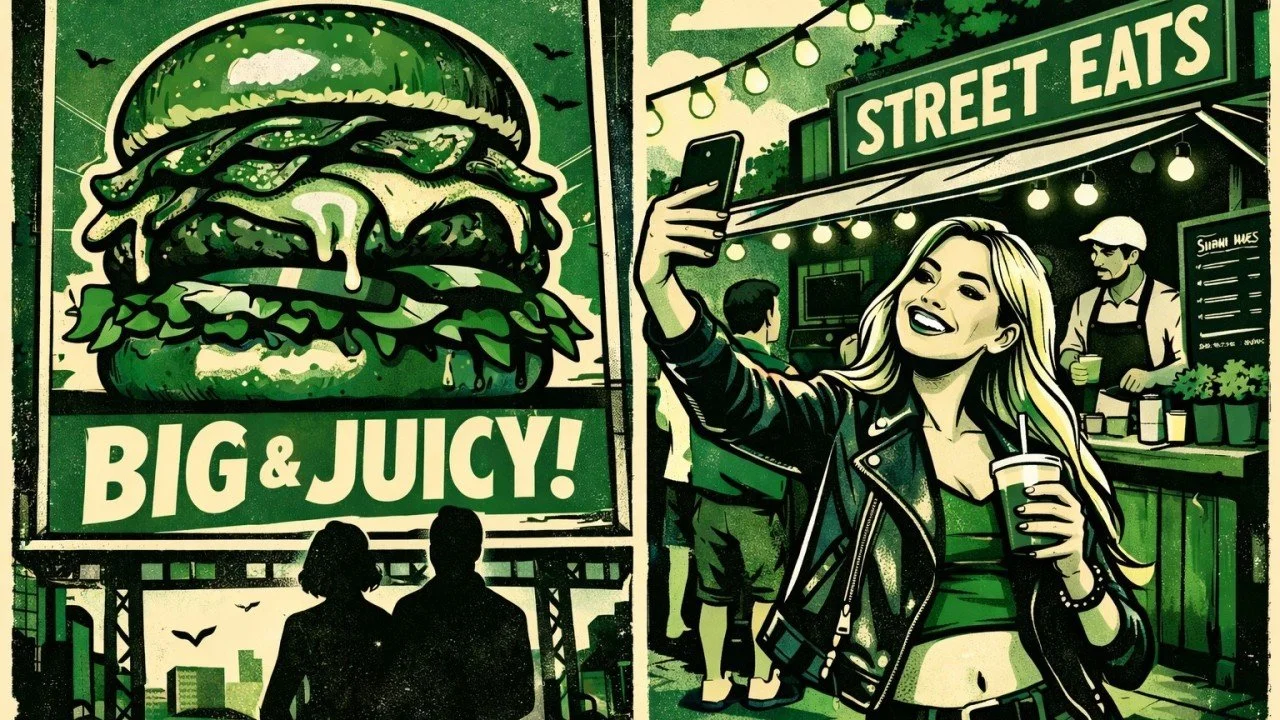
HFSS Is Here. Now What?
HFSS has changed how food and drink brands can advertise online. But hospitality marketing isn’t dead - it’s evolving. Here’s how smart brands are adapting through organic social, PR, experiential activity and experience-led growth.
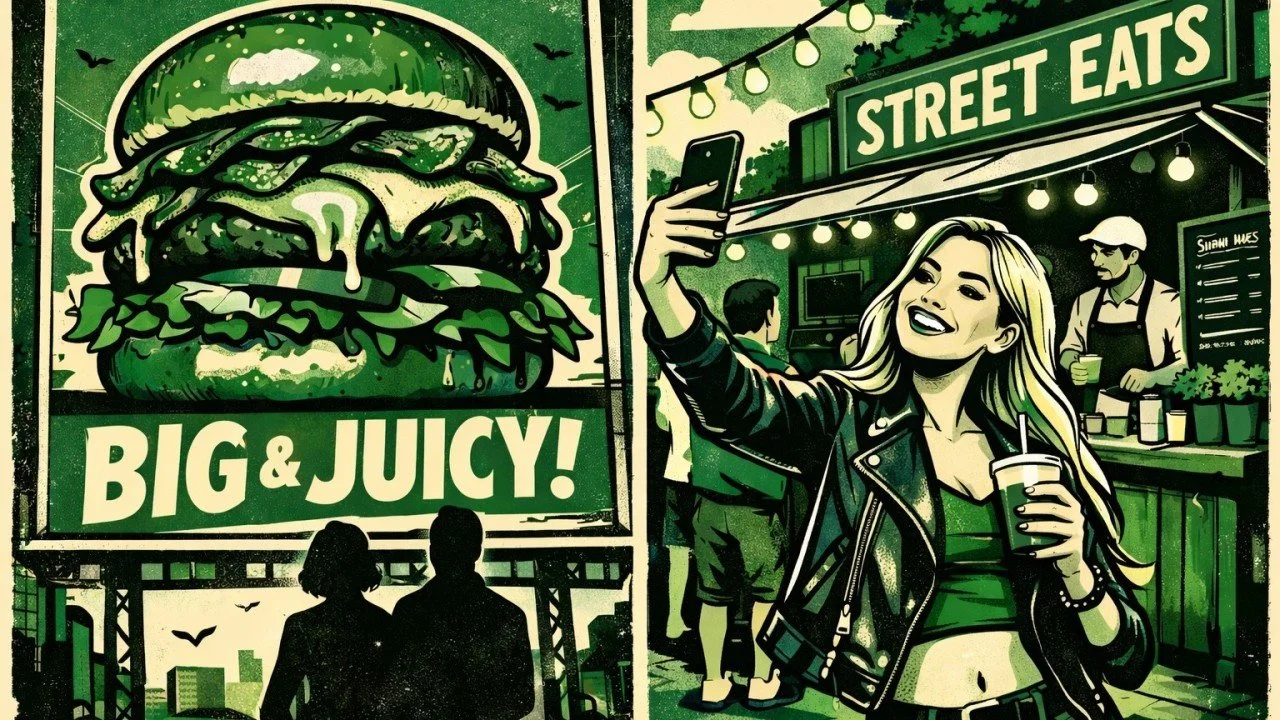
The UK’s HFSS food advertising ban is live.
If you sell burgers, pizzas, desserts or sugary drinks, you can’t run paid online ads promoting them.
No boosted posts.
No paid product-led influencer content.
No performance campaigns pushing HFSS food.
For some hospitality brands, that feels like a disaster.
It isn’t.
HFSS hasn’t killed marketing.
It’s killed lazy marketing.
What You Can Still Do
You can still:
Post organically
Run PR campaigns
Create events and experiences
Encourage customer content
Build brand awareness
The opportunity hasn’t disappeared.
The approach just has to change.
What Smart Hospitality Brands Are Doing
1. Going Organic-First
Organic social is now the main event.
The brands winning are building:
Personality
Community
Consistency
Cultural relevance
Think Blank Street. Think Dishoom. The ritual and atmosphere are the story, not just the plate.
2. Selling the Experience, Not the Dish
HFSS limits paid product promotion.
It doesn’t limit storytelling.
The shift is simple:
From: “Look at this burger.”
To: “This is what it feels like to be here.”
Atmosphere. Energy. People. Belonging.
That’s what drives footfall.
3. Taking the Product to the Customer
If you can’t push food into feeds, put it into hands.
Sampling and experiential are back in a big way:
Pop-ups
Collaborations
Festival activations
Community events
Joe & The Juice didn’t grow quietly online. Their physical presence became the marketing.
Real-world experiences drive real-world demand.
4. Creating Something Media Want to Talk About
If paid reach shrinks, earned reach matters more.
That means:
Bold product drops
Cultural collaborations
Newsworthy moments
Data-led stunts
Greggs has mastered this. Constantly relevant. Constantly shareable.
PR is no longer a support act. It’s a growth channel.
The Bigger Shift
HFSS raises the bar.
The brands that relied heavily on paid ads will struggle.
The brands that invest in:
Organic-first strategy
Experiential marketing
PR-led growth
Strong brand identity
…will build something more resilient.
And more valuable.
Not Sure Where You Stand?
If your growth relied on paid ads or gifting influencers, it’s time to reassess.
HFSS is a constraint.
But constraints often create better marketing.
If you want to talk strategy, get in touch.
We’re hiring: Operations Manager
We’re looking for an Operations Manager to help power the next stage of growth at Down at the Social. If you love systems, people, process and making great work happen smoothly, you’ll fit right in. This new role is central to how we run, collaborate and deliver brilliant work for our clients.
Asana geek? Love systems? Get a kick out of making workflows flow?
We’re looking for a highly organised, systems-obsessed Operations Manager to join our team.
This is a brand new role for us — perfect for someone who has worked in a PR, social or creative agency and discovered they love the ops side of things just as much (if not more!) than the creative delivery.
We’re looking for someone who gets a buzz from tidy workflows, smart systems and smooth-running projects. Someone who enjoys bringing structure, clarity and efficiency to a fast-moving team so they can focus on delivering brilliant work.
If you love Asana, processes, timelines and making things work better, you’ll thrive here.
What you’ll do
Own our systems & workflows
Take full ownership of Asana - building templates, workflows, dashboards and reporting tools.
Ensure every campaign and retainer is set up for success, with clear tasks, timelines and owners.
Create processes that reduce friction and allow the team to focus on creativity and results.
Make our team faster and smoother
Lead weekly resourcing and capacity planning.
Track workloads, deadlines and potential bottlenecks, flagging issues early.
Redistribute tasks where needed to keep the whole team moving efficiently.
Improve how the agency runs
Audit our current ways of working and make them better.
Build documentation, templates and processes that scale with us.
Champion best practice in project management and time management.
Support our client delivery
Ensure timelines and plans are set up correctly and consistently.
Organise team workflows for content production, campaign delivery and quarterly reporting.
Help everyone stay ahead of deadlines, with nothing slipping through the cracks.
Help shape internal culture
Support team communication, clarity and accountability.
Lead internal rhythms such as stand-ups, weekly planning or retrospectives.
Keep us aligned to our values: sociable, bold, collaborative, authentic and always learning.
Train and upskill the team
Coach team members on Asana and workflow best practice.
Help newer team members get confident using our systems quickly.
Spot skills gaps and recommend tools, improvements or training.
Support day-to-day operations
(Not HR or finance heavy — just agency-wide organisation.)
Help with onboarding new joiners.
Maintain and improve internal systems, tools and documentation.
Assist managers with operational planning as the agency grows.
Who you are
2–5 years’ experience in a PR or social agency.
Someone who loves systems, processes and organisation.
Strong understanding of how agency workflow and campaign delivery operate.
Highly proactive, calm under pressure and solutions-focused.
A clear communicator who can keep the team aligned and accountable without being heavy-handed.
Confident using Asana (or similar tools) and excited to make it work harder for us.
Someone who enjoys making everyone else’s job easier and the business stronger.
We're happy to consider part time or freelance roles but specifically need a doer not a consultant for this role.
Salary £30–40k depending on experience.
Work approach
We operate on a hybrid basis - working from our Manchester city-centre office when the team needs to collaborate, and working remotely when it makes sense. We trust our people to own their time and deliver great work.
Interested?
Email Daisy Whitehouse at hello@downatthesocial.co.uk with your CV, a short note about why you love operations, and examples of how you’ve improved systems or workflows in previous roles.
Why We Ask Our Clients About Their “Love Languages”
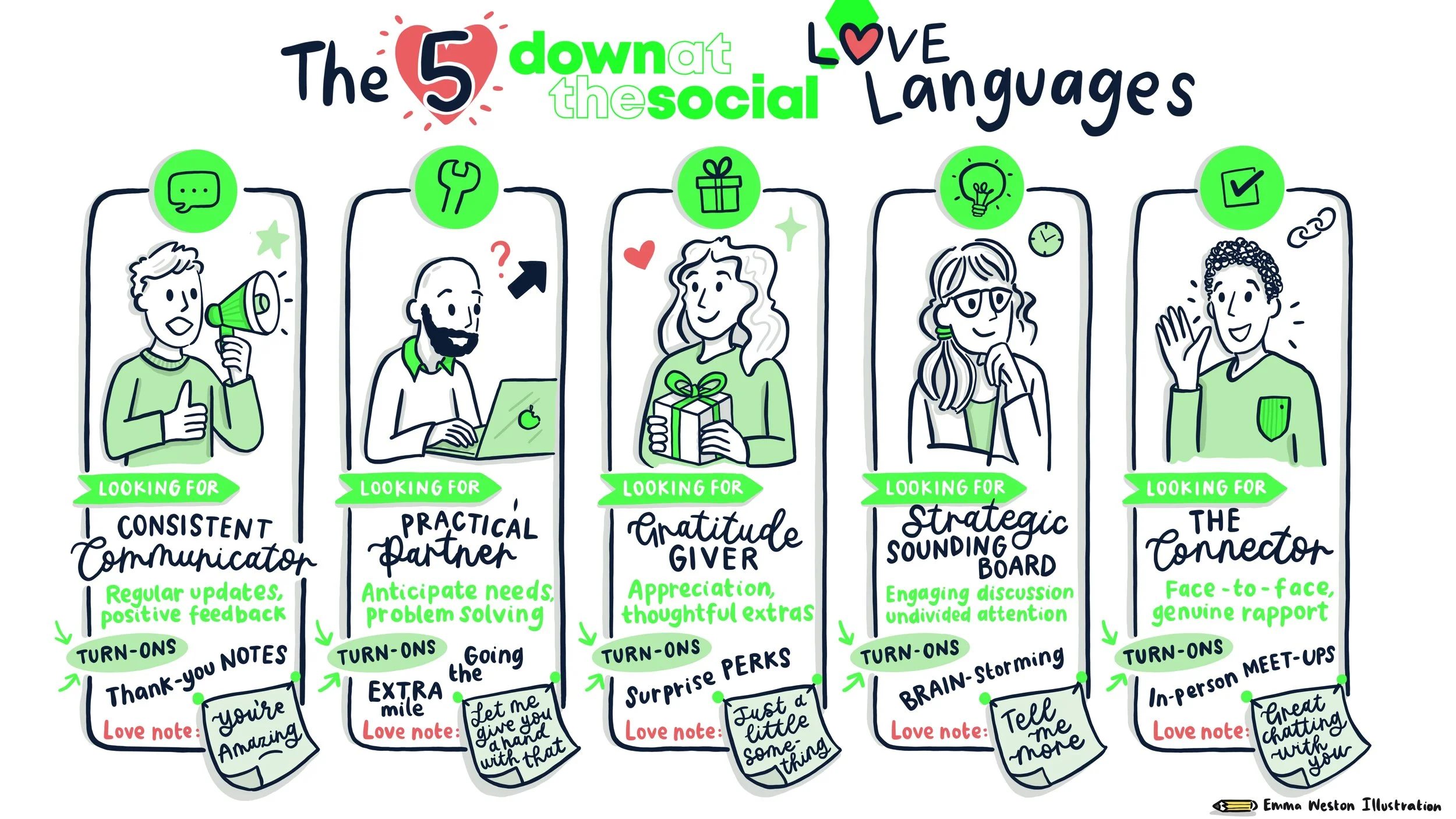
At DATS, we know that every client is different. Some value recognition, others prefer practical support, and some just want time together to talk things through. That is why we ask each client about their “love languages.” It helps us tailor how we communicate, celebrate wins, and strengthen partnerships in ways that feel natural and meaningful.
At DATS, we see client relationships as partnerships that grow stronger when there is clarity, respect, and genuine connection. That is why we ask every client to share their “DATS love languages” with us.
The idea comes from the well-known concept of personal love languages, which describe different ways people prefer to give and receive appreciation. We have adapted this into a professional framework that helps us strengthen collaboration, celebrate milestones, and provide support in ways that truly resonate with each client.
“Client love languages help agencies personalise support and recognition. By asking clients how they prefer to communicate and celebrate wins, DATS builds trust faster, strengthens relationships, and delivers collaboration that feels more human.”
The DATS Love Languages
We reimagined the five classic love languages for business contexts.
Words of Affirmation: specific praise, personal notes, and public recognition
Quality Time: meaningful catch ups, co working, and face to face moments
Acts of Service: proactive support, done for you tasks, problem solving
Receiving Gifts: thoughtful and relevant presents that spark joy or add value
Physical Touch Point: tangible experiences like handwritten cards or surprise packages
Why We Ask
Every client has different working preferences. Some thrive on regular recognition, while others prefer a quiet thank you over lunch. Some enjoy surprise treats, while others place the highest value on practical support.
By asking about love languages at the start of a partnership, we can:
Establish trust quickly by showing clients we see them as people, not just projects
Celebrate progress in ways that feel authentic to them
Provide support that makes working together smoother and more enjoyable
What It Means for Clients
This approach is not about grand gestures or gimmicks. It is about respecting how clients like to communicate, how they prefer to be acknowledged, and how they best feel supported. When we know a client’s love languages, we can:
Share progress updates in the format they prefer
Mark achievements in a way that feels genuine, not performative
Anticipate small needs and respond with thoughtful, relevant touches
The Impact
We have seen this approach deepen relationships, reduce friction, and make collaboration more rewarding for both sides. It creates a culture where professional partnerships feel personal without being intrusive. It also positions us to deliver those small moments that show clients we are listening and paying attention, which often matter as much as the larger campaigns.
In short, asking about love languages is our way of turning a good working relationship into a great one. It reflects our commitment to not just delivering outcomes, but building partnerships that last.
Franchise, But Make It Family: Why Your QSR Brand Can't Afford to Ignore Franchise Stores

In the quick service restaurant (QSR) world, franchise models aren’t just common, they’re foundational. But too many brands fall into a dangerous habit: treating their franchise locations like second-class citizens. Here's the truth: if your logo is on the door, it's your brand, no matter who owns the lease.
1. The Brand is the Brand (No Asterisks). To your customers, there's no such thing as a "franchise store" vs. an "equity store." There is only your brand. One poor experience at a neglected franchise location can do just as much damage to your reputation as a bad meal at HQ.
2. Franchisees Are Partners, Not Just Payers. Franchisees invest serious capital and time into your brand. They are your frontline operators, your local experts, and often your most vocal advocates. When you fail to support them, you're not just cutting corners, you're cutting ties with some of your most valuable assets.
3. Marketing Support Shouldn’t Be a Perk, It’s a Pillar. New campaign rollouts? Social media strategies? Store openings? Influencer activations? If your equity stores are getting the VIP treatment while your franchisees get a watered-down version or, worse, nothing at all, you’re creating inconsistency and resentment. Everyone should be playing with the same tools, the same firepower.
4. Data Consistency Means Brand Consistency. If franchise locations don’t have access to the same tech stack, analytics dashboards, or content creation tools, you're flying blind in key markets. Uniform data means smarter decisions, more relevant marketing, and a seamless customer experience across all locations.
5. Support Local Marketing with National Clout. Local marketing can be a powerhouse when it’s done right. Franchisees need brand-approved, plug-and-play assets for social, PR, events, and more. But they also need freedom to tailor messaging to their communities. National backing, local flair.
6. Flip the Script: Franchise Stores as Testbeds. Some of the best ideas in QSR start at the grassroots level. Empower franchisees to test new concepts, campaign angles, or community partnerships. Make feedback loops a core part of your strategy, not an afterthought.
7. First Impressions Count: New Towns, New Opportunities. Opening a franchise in a new town or city could be the very first time someone experiences your brand. That launch moment is make-or-break. A well-executed opening with strong local marketing, community engagement, and consistent brand execution can transform first-timers into loyal customers. Do it right, and that new location becomes a flagship for your growth.
Final Bite Your franchise network isn’t just a revenue stream. It’s your brand in the wild. Support it with the same energy and investment you give your owned stores, and the entire system gets stronger.
Want to supercharge your franchise marketing with strategy, content, and creative that actually scales?
Championing Women in Leadership: Why I'm Proud to Be Part of the Lancashire Women's Enterprise Steering Group
Discover how Down at the Social champions female founders through strategic PR and leadership initiatives, driving inclusive business growth in Lancashire.
Inspiring women to step into their full potential as business leaders has always been important to me. From the way we operate at Down at the Social (flexibly ALWAYS), to the clients we champion and the communities we support, empowering women in business isn’t just a side note - it’s a core value.

Down at the Social PR event for women in business
That’s why I’m proud to be a founding member of the Lancashire Women’s Enterprise Steering Group (LWESG), a passionate and powerful collective working to reshape the business landscape in our region.
Why the Lancashire Women’s Enterprise Steering Group Matters
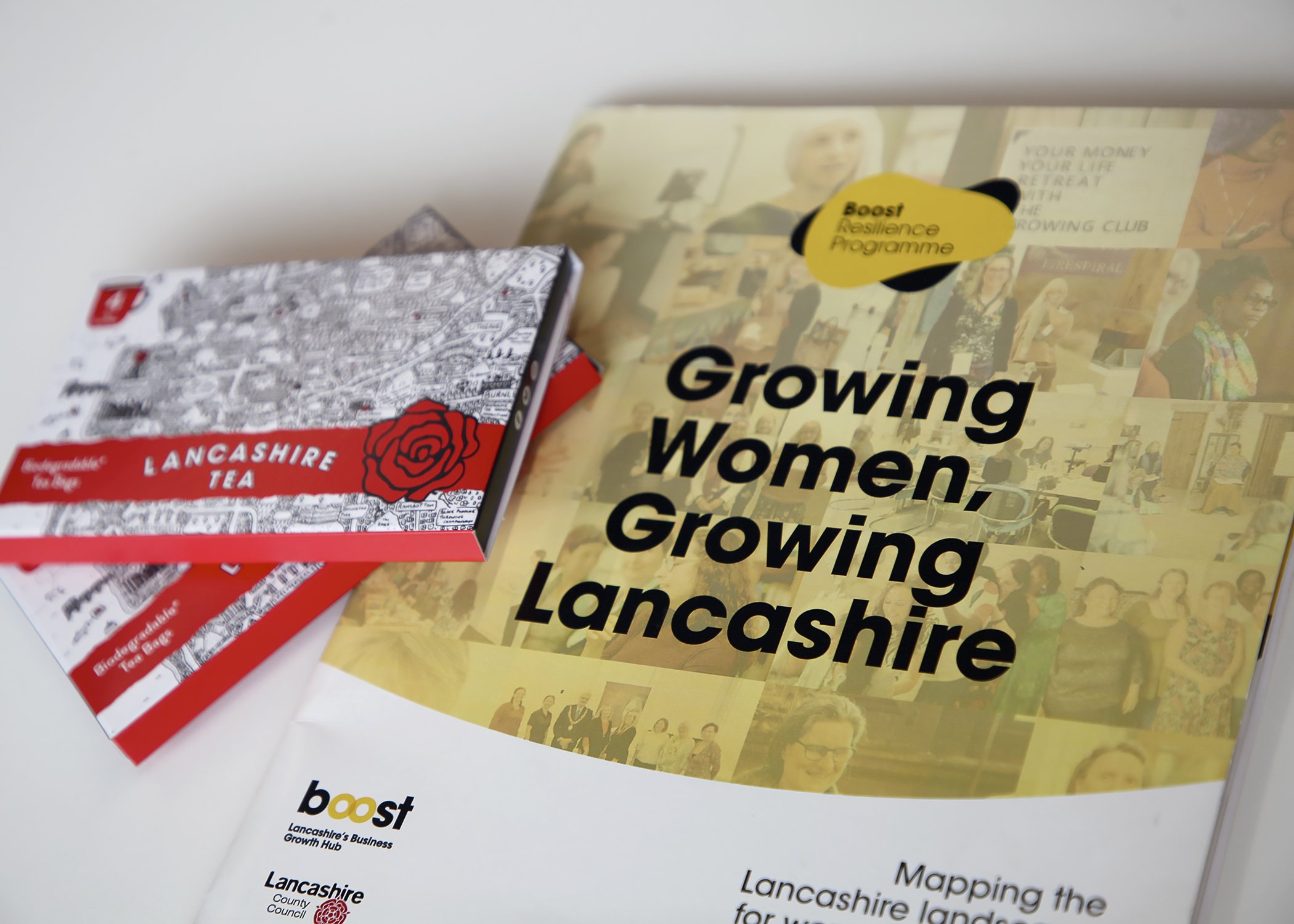
The LWESG was formed in response to Wendy Bowers’ Growing Women, Growing Lancashire report, which highlighted a startling opportunity: if women in Lancashire started and scaled businesses at the same rate as men, our county’s economy could grow by £3 billion. That’s a 10% uplift—just by unlocking the potential of women entrepreneurs.
The group is made up of trailblazers from across sectors—business owners, educators, council leaders, and corporate professionals—all committed to driving up the number of female business owners and women in senior leadership roles across Lancashire.
I first met Wendy when I joined a programme she was running for Boost Lancashire called Women Scaling Up. She inspired me to follow her lead and get involved in shaping how our country operates.
Our goal is ambitious but achievable:
✅ 30% of Lancashire business owners to be women
✅ 45% of senior employed leaders to be women
It’s about so much more than numbers. It’s about shaping a fairer, more dynamic economy where everyone has the opportunity to thrive.
My Passion for Supporting Women in Business
At Down at the Social, I’ve worked alongside some incredible women-led businesses—from hospitality to retail, social impact to start-ups. I’ve seen the unique challenges women face—balancing business ambitions with family life, navigating funding gaps, battling imposter syndrome, and often, doing it all with limited support.
I have also employed a lot of women - it’s PR after all! Girls defo run the PR world!
Joining the steering group has given me a platform to not only advocate for change, but to help create it. Whether it’s through thought leadership, mentorship, or just being in the room where decisions are made, I am keen to be part of the momentum that’s moving Lancashire forward.
Real Change Starts with Real Conversations
At our latest LWESG event, I was part of an electric morning of conversations with over 40 brilliant women and allies. We didn’t just talk about problems—we shared what’s working, asked hard questions, and left with actions.
Topics included:
How flexible working opens doors to leadership
Why measuring progress (not just intentions) matters
The ripple effect women leaders have on culture, mentoring, and confidence
These are the discussions that ignite action.
Empowering female founders through strategic PR
What's Next?
As a Steering Group, our focus now is on raising visibility, building partnerships, and creating practical frameworks to support women at every stage—from startup founders to boardroom leaders.
We would like to invite as many businesses and most importantly, MEN, to join the movement and show up for the women around them - be they colleagues, wives, daughters or friends.
Want to Get Involved?
If you're a woman in business—or an ally—who wants to know more or share your knowledge and experiences, let’s talk. Whether it’s collaboration, mentoring, or just showing up to the next event, your voice matters.
A great place to start is our Linkedin page.
What’s Your PR Hook? 5 Ways to Make Your Brand Newsworthy
Want your brand in the press? It’s not just about having a great product—it’s about the story you tell. From founder journeys to celeb sparkle, here are 5 powerful PR hooks that catch headlines (and customers). Ready to make some noise?
If you’re trying to get your brand in front of the right audience without a PR hook, you’re shouting into the void. Journalists need a reason to care. Editors want a story, not a sales pitch. And your audience? They’re skimming fast and clicking faster.
At Down at the Social, we live for making brands media-ready. Here are five proven PR hooks we use to turn brand stories into headlines and sales.


1. 🎤 Start With You: People Stories That Stick
A compelling founder story is media gold. Whether you’re building a niche community or going after global domination, your why matters.
Take Nicky, who launched a dating app for widows after losing her husband to Covid. By sharing her journey, she created instant emotional connection—and landed coverage that resonated far beyond her core audience.
🔥 Hook it: Be raw. Be real. Start with your story, and you’ll find others want to share it too.
2. 🛒 Product Coverage: Right Place, Right Time
Product PR isn’t about spraying links - it’s about showing up where it counts. That could mean being featured in a seasonal roundup, a gifting guide, or the pages of the right foodie mag.
We nailed it for Macknade by placing their Christmas hamper in The Independent’s Best Buys. Smart targeting = serious clicks and conversions.
🔥 Hook it: Match your product to the moment. Media placement + timing = ROI.
3. 📰 Newsjacking: Ride the Wave
If it’s trending, it’s an opportunity. Jump on relevant stories, cultural moments, or surprising stats to earn fast media attention.
Like TLC linking their mission to an EastEnders storyline about parental abuse. Clever. Relevant. Unmissable.
🔥 Hook it: Ask, “What’s everyone talking about today—and how can we add value?”
4. 🎓 Expert Comment: Be the Voice of Reason
When you’ve got something meaningful to say, say it loud. Journalists want opinionated experts who can simplify complex issues and shift narratives.
Michelle Hill of TLC did just that, writing on sustainable charity funding. Her voice? Strategic, solution-driven—and media-ready.
🔥 Hook it: Use your platform to lead conversations, not follow them.
5. 🌟 Celebrity Power: Sparkle Sells
Whether it’s a shout-out, a selfie, or a collab, celebrity involvement can catapult a brand into the limelight.
Like Gemma Collins and her gin partnership - instant visibility, massive reach, and product sell-outs. The partnership and the story told retailers that Zymurgorium were serious about marketing and knew their audience, leading to conversations with national multiples that turned into listings.
🔥 Hook it: Think smart about celeb fit and audience alignment. One photo can change everything.
So, What’s Your Hook?
From founder stories to newsjacking and seasonal round-ups, the right hook turns your message into media gold. And if you don’t know where to start - we do.
💌 Slide into our DMs. Let’s make headlines.
Debunking Media Myths: A Reality Check for Modern Marketers
From “Print is dead” to “Everyone’s on TikTok,” the media world is full of catchy myths — but are they actually true? Inspired by Anders Braso’s popular post on LinkedIn, we take a closer look at 10 media myths that modern marketers need to let go of. Our take? Real impact comes from integration, not isolation.
In an era where digital channels dominate discussions, it's easy to fall into the trap of believing that traditional media is obsolete. However, as Anders Braso, chief marketing officer at Monocle, aptly points out, many of these assumptions don't hold up under scrutiny.
The Myth: "Print is Dead"
Contrary to popular belief, print media continues to thrive in specific niches. Monocle's success story is a testament to this, demonstrating that high-quality, curated content still has a dedicated audience willing to invest in tangible experiences. I have been to Dallas, Istanbul, Munich and Zurich with the magazine as a Patron and I am already looking forward to Barcelona later this year. They built on my initial engagement with the magazine by creating a ‘club’ that travels all over the world to engage with the magazine and its writers and publishers. It is a truly unique and valuable experience.
The Myth: "TV is Over"
While streaming services have transformed viewing habits, television remains a powerful medium, especially for live events and news. The key lies in understanding the audience's preferences and delivering content that resonates across platforms.
We have clients tapping into the power of Sky AdSmart and seeing tangible growth as a result.
The Myth: "Everyone's on TikTok Now"
TikTok's meteoric rise is undeniable, but it's essential to recognize that different demographics gravitate towards different platforms. A one-size-fits-all approach can lead to missed opportunities in engaging with diverse audience segments.
But who would have ever thought we would be buying Birkins in one click on a network that started off as a lockdown dance trend platform!
Integrated Marketing: The Way Forward
The most effective marketing strategies are those that integrate multiple channels. Out-of-home advertising, podcasts, social media, and editorial content each play a unique role in building brand awareness and driving engagement.
It's not about choosing between traditional and digital media but understanding how they can complement each other to create a cohesive narrative.
We are about to launch a campaign for a well known brewery that will combine OOH billboards and poster sites and newspaper advertising with events, influencers and social media campaigns to reach two very diverse yet equally important audiences and engage them in two different dialogues about one brand.
Conclusion
In the rapidly evolving media landscape, it's crucial to challenge prevailing myths and base strategies on data-driven insights. By recognizing the value each channel brings and integrating them thoughtfully, marketers can craft campaigns that truly resonate with their target audiences.
For a deeper dive into Anders Braso's perspectives, you can read his full post here: 10 Media Myths
HFSS Crackdown: Say Goodbye to Paid Food Ads and Hello to Organic Strategy
From October 2025, the UK bans paid ads for HFSS food. Discover how your brand can adapt with engagement-led, organic social strategies to stay compliant and competitive.
Big changes are coming to the way we advertise food in the UK. From 1 October 2025, the government’s new HFSS (High Fat, Salt, Sugar) restrictions will come into effect - and if you’re in hospitality, retail, or media, this isn’t just a heads-up, it’s a major shake-up.
What Is the HFSS Crackdown?
The HFSS advertising ban means that paid promotions for non-compliant foods — think triple-fried chicken burgers, saucy milkshakes, and decadent desserts — will no longer be allowed across any paid digital channels. And it’s not just ads. Influencer content, banner promotions, and sponsored posts could all fall under fire.
Not only will brands lose access to major advertising avenues, but violations could result in financial penalties and reputational damage. This is serious business.
What’s OUT:
Paid social ads for non-HFSS-compliant foods
Banner ads or programmatic campaigns featuring high-fat/sugar items
Influencer promos that involve payment or sponsorship
What’s IN:
Organic content that drives real engagement
Value-led storytelling
Community-focused, algorithm-friendly creativity
Engagement Over Everything: Why Organic Is Now King
With paid options off the table for many brands, the secret sauce is now engagement-focused organic content. It’s not about chasing likes anymore — it’s about how users interact with your posts.
Here’s how platforms reward performance:
📱 Meta (Instagram & Facebook):
Algorithms favour time spent, shares, comments, and saves. That means captions that spark conversation, carousel posts, and calls-to-action that keep people scrolling, tapping, and sharing.
🎵 TikTok:
It’s all about completion rates and replays. You’ve got three seconds to hook your viewer and convince them to stay. Snappy, high-retention content is what wins here.
🔍 YouTube & Google:
Click-through rates and watch time rule the roost. That means optimised titles, engaging thumbnails, and deep-dive content that encourages binge-watching and boosts your search visibility.
The Metrics That Matter Now:
✅ Page visits
✅ Link clicks
✅ Comments & shares
✅ Saves
✅ Watch time
✅ Return visits
These are the signals that push your content further — automatically. Think of it as feeding the algorithm the right fuel.
What Should Brands Be Doing Right Now?
If your products fall into the HFSS category (or even might), now is the time to:
Audit your Q4 plans — are you relying on paid food ads?
Reallocate budgets toward organic content strategy and influencer gifting (not paid).
Work on SEO-led, high-engagement content that drives clicks and time-on-page.
Train your teams and partners on the new rules to avoid penalties.
Don’t wait until your campaign is pulled or your brand’s credibility is questioned. Get your HFSS ducks in a row now, or risk a very sour Q4.
Need support navigating the HFSS shift?
We’re already working with clients to future-proof their strategy. Let’s talk organic wins and algorithm magic.
🟢 Down at the Social
We make social work smarter.
Leveraging National Days in Marketing and PR Strategy
National Margarita Day; National Dog Day; World Book Day and even the more obscure and niche National Tortilla Chip or National Lemon Juice Day, it seems like there’s a day to celebrate almost everything.
But why, as marketeers, do we embrace these days and use them to connect with our target audiences?
Well, it’s simple. We are always on the lookout for innovative opportunities to not only connect with our target market but to build brand awareness, brand loyalty and drive engagement. In the past five years we’ve seen an increase in brands using these national days, such as National Coffee Day or International Women’s Day to make meaningful connections with their target audience and enhance their brand image.
Used correctly and meaningfully brands can successfully leverage these days to huge success. But, they can equally get it wrong and there have been some clangers from brands down through the years.
So why should businesses consider building a strategy around these national days?
They can tap into cultural relevance. National days are often connected to societal issues. By aligning strategy with these occasions, businesses can tap into the collective consciousness of their audience and demonstrate their relevance and awareness of current trends and concerns. For example, a company participating in Earth Day celebrations by promoting their sustainable practices can demonstrate their commitment to the environment to more eco-conscious consumers, potentially opening up a whole new customer base.
Building Brand Identity. Incorporating national days into campaigns allows businesses to showcase their brand identity and values in a way that makes them relevant to audiences. Whether they are supporting social causes or celebrating diversity, businesses come across as socially responsible entities that care. They are not solely focused on profit. This helps them to nurture strong, emotional connections with consumers who share similar values which, in time, can lead to brand loyalty and advocacy. A joint study from McKinsey and NielsenIQ examined sales growth for products that claim to be environmentally and socially responsible. Products making ESG-related claims averaged 28 % cumulative growth over the past five-year period, versus 20 % for products that made no such claims.
Generating PR Opportunities: Some national days attract significant media attention and public interest, and brands that align with the right ones can amplify their message and reach a wider audience. By leveraging these occasions to share brand stories, launch new products, or highlight something good in the company, businesses can garner media coverage and drive social media engagement. The downside of this, of course, is if brands try and jump on the wrong day they can end up doing more harm than good. In 2021 Burger King generated quite the controversy on International Women’s Day after declaring that “Women belong in the kitchen.” The fast food chain insisted that it was part of their campaign for gender equality but it just missed the mark and they were criticised heavily.
Boosting engagement and, crucially, sales: National days can offer businesses the chance to create excitement and anticipation among consumers through special promotions. If they can seamlessly capitalise on the heightened awareness surrounding these occasions, businesses can drive engagement both online and offline.
Here are some of the National Day Marketing Campaigns we loved in the last 12 months.
Norwich City FC – ‘Check In On Those Around You’
Norwich City FC’s ‘Check In On Those Around You’ campaign, was shared by the football club on World Mental Health Day in October.
The two-and-a-half-minute video shows two male football fans sitting in the same football stadium throughout the season. One of the men appears quiet and withdrawn, while the other is happy, and checks in on how his friend is doing. The film concludes by showing the empty seat of the perceived happier man, who has died by suicide. It aims to dispel the myth that only people who show obvious signs experience poor mental health. It was posted with the following caption: “At times, it can be obvious when someone is struggling to cope, but sometimes the signs are harder to spot.”
The film was viewed more than 57 million times on Twitter, with over 153,000 reshares and 311,000 likes. On LinkedIn, it gained more than 1,000 comments and more than 20,000 reposts.
Guinness – ‘Holding out for a Zero’
On Patrick’s Day 2023 Guiness asked revellers to ‘Make it a Patrick’s Day to Remember” and launched a responsible drinking campaign on a day long associated with alcohol. In the lead-up to the day Guinness 0.0 launched its ‘Singing Pints’ campaign, inspired by a consumer trend of drinkers blowing smiley faces on the head of their pint and then posting the pictures to social media.
Guinness 0.0 took the trend one step further and had the smiley faces come to life to sing a parody of a Bonnie Tyler classic – ‘Holding Out for a Zero’.
The campaign also built pride for Irish consumers ordering a non-alcoholic drink (8% agreeing with the statement ‘Proud to order a non-alcoholic drink’ after the campaign versus before).
Across the UK and Ireland, Guinness was also the most talked about non-alcoholic brand (across any sector) for the year ended 15 June 2023.
The Power of Product Placement
First off - what is product placement?
It involves integrating products or brands seamlessly into various media channels - like a gift guide of the best gins to buy mum for Mother’s Day - the appearance of a drink in a film scene or the prominent display of a luxury car in a television series. Product placement strategically captures the attention of consumers and, when executed correctly, can influence consumer behaviour and impact brand visibility, credibility, and consumer engagement.
Understanding Product Placement
Product placement is not a new concept, it has been around for decades. The main example is where brands pay for their products to appear prominently in movies, tv series and music videos. Think Rayban sunglasses in Top Gun, Diet Coke in Keeping up with the Kardashians or Nike in Drake’s music videos.
Now, in 2024, product placement expands beyond this and includes digital content, social media and print publications.
With PR and gift guides, product placement involves featuring products within editorial content and curated gift lists. Unlike traditional advertising, product placement blends seamlessly with the surrounding content, making it less intrusive and more engaging for consumers.
Product Placement in PR
In the competitive landscape of PR, standing out amidst the noise is more crucial than ever. Product placement is a unique opportunity to showcase brands using the credibility of third-party media outlets. Here's why product placement is essential in PR:
1. Building Brand Recognition
Through strategic placement in the right media brands can increase their visibility and build recognition among target audiences. When India Knight featured a Beauty Pie serum in The Sunday Times Style Magazine it sold out within hours.
2. Enhancing Credibility
When products are featured within relevant editorial content, they, in turn, gain endorsement from the media outlet, enhancing the brand's credibility and trustworthiness in the eyes of the consumers.
3. Generating Positive Publicity:
Product placements can generate positive publicity and buzz around a brand, driving word-of-mouth recommendations - GOLD - and organic social media engagement.
4. Engaging Target Audiences:
If you can align with the interests of your target market then you can capture - and hold - their attention which will only foster a deeper engagement with the brand.
Product Placement in Gift Guides
Gift guides have become a popular resource for consumers seeking inspiration and recommendations for various occasions, including Christmas (the Christmas hamper gift guide market is COMPETITIVE - Easter (top 10 eggs this easter) or things like Mother’s and Father’s Day gift guide. It presents several advantages for brands:
1. Targeted Exposure
Gift guides allow brands to showcase their products to highly targeted audiences based on specific themes, demographics, and interests, increasing the likelihood of capturing the attention of potential customers who will ACTUALLY spend money.
2. Influencing Purchase Decisions
Products featured in gift guides are positioned as desirable which will influence consumers' purchase decisions and drive sales during key shopping periods, like Christmas.
3. Providing Solutions
These gift guides offer practical solutions for those looking for gift ideas. Brands position themselves as reliable sources for unique and thoughtful gifts. More and more consumers use gift guides as inspiration for their purchasing decisions.
4. Fostering Brand Affinity
Gift guides create opportunities for brands to connect with consumers on an emotional level which will ultimately foster brand affinity and loyalty.
In conclusion, in the ever-competitive and ever-changing marketing and PR landscape product placement is one of the most valuable tools for brands who are looking to expand their reach, influence consumers perceptions and, ultimately drive sales. If a brand can effectively (and sometimes emotionally) integrate their products into PR campaigns and gift guides they can engage the right audience and establish long term loyalty that will live o beyond the initial purchase.
Why you should do an April Fools Stunt...
Sorry, but I still love them and it's not long now so have you got yours planned into your PR and social media calendar... food, beauty, property, FMCG, drinks, booze, hospitality? Any sector can deliver a great, often affordable, targeted campaign hooked on this seasonal moment.
We've fooled many a journalist, even Lorraine Kelly herself with a face mask made from seagull poop from Freeport Fleetwood/ Affinity Fleetwood.
A shark in Salford Quays you say? Surely not… no just a canny piece of content from SEA LIFE Manchester who of course do have real sharks at the Trafford Centre.
It's not just about tripping people up. April Fools can be a time for fun but also for delivering brand messaging. A time for signposting what your brand stands for, or for weird and wonderful partnerships that you can only dream of or just being super creative with your product range.
It could be a way to launch something new but with a bit of a twist to get attention on a day that often generates plenty of PR coverage and social shares.
For example - Chopstix Group chicken perfume! Not as instantly gross as it sounds because Chopstix hero product - Caramel Drizzle Chicken - has a sweet, sticky, fruity delicious scent which actually made a damn good perfume and most importantly Chopstix fans went CRAZY for it!
Stuck for an idea? Get in touch for a free consultation to see what we could do for you this April... or any other time of course.
Are big money PR stunts still generating the ROI you need?
Stunts are a big thing in PR but they are costly, take a huge amount of time and resource and don't always land.
❓Are they still worth it ❓
💯 as long as you have very clear objectives and, as ever, know exactly who you want to reach, why and how you are going to measure the results.
Most stunts are about brand awareness.
🐕 The much talked about Snoop Dogg campaign for the smokeless stove business Solo Stove was deemed a disaster because it didn't immediately sell products. This was a pretty unrealistic objective for a one time purchase product in November - not a time renowned for people investing in their gardens or sitting outside (probs is in LA where Snoop lives but surely not across most of the rest of the USA or Europe?).
I LOVE these stunts from The Ordinary and local agency One Agency Media.
So what do you need to consider when planning a stunt?
👯 - Who is your audience? Where are they? Is this aiming to generate social buzz or media coverage or both? Do you want members of the public to engage? For The Ordinary stunt, the Thames part saw regular folk taking pics of it but the Harrods activity was CGI so very much more of an online campaign because there was nothing to see IRL. It was clever though because there is no avoiding knowing where the pop-up shop is when it saw so many shares.
💰 How much budget do you have? As I said, stunts are often not cheap. CGI might be less expensive than hiring a boat and making a giant bottle of your product but it takes time and skills to get right.
🗞 Is it newsworthy? If you want to drive media coverage then what's the hook? Media won't write about you just because you think it is interesting. The very first, big CGI stunts all bagged themselves a lot of coverage but are journalists not wanting to appear to be tricked into thinking content is real when it isn't now?
💲 Brand awareness vs sales. In an increasingly 'performance marketing' led world, some brands seem to have forgotten that they need brand awareness and endorsements to generate sales - not just ads ads ads. If I see an ad for an unknown brand, I am going to check them out on media sites and social to see if they are legit. This is harder to measure but with the right metrics and some robust research (market penetration for example you can benchmark at the beginning and measure again at the end).
As always, get clear on your why and you will be on to a winner.
Our top three recent stunts are:
For me (Daisy) It’s The Ordinary - as already covered!
Katie, our account exec chose - Jacquemus’ and it's driving Le Bambino bags
Sam, DATS’ newest account manager, went for - The Griselda truck!
Katie said: “This is my favourite because it combines everything I love about PR: it is creative, innovative and surprising.
“This was one of the first CGI ads I’d seen and I remember the buzz when the photos and videos first came out, with everyone wondering how they could possibly make this work and have permission to do something so bold in Paris.
“The stunt highlights how Jacquemus are consistently thinking outside the box to leave a lasting impression, and I think it’s a great example of how brands can take a relatively simple idea, and turn it into something viral.”
Sam said: “Griselda’s ‘Cocaine Truck’ was a stunt that emulates the old P.T Barnum adage: ‘there really is no such thing as bad publicity’.
“Some people definitely found it controversial, and I will admit that the idea of creating a hulking HGV that prowls the streets of Paris pretending to snort illegal drugs from the roadway does sound quite mad.
“But for me, it struck the right balance of risque; edgy enough to grab headlines, safe enough not to damage the brand. It got coverage in print, across online and went viral via social, and is a great example to anyone that says the PR stunt has had its time in the sun.”
PS if in doubt - float it down the Thames!
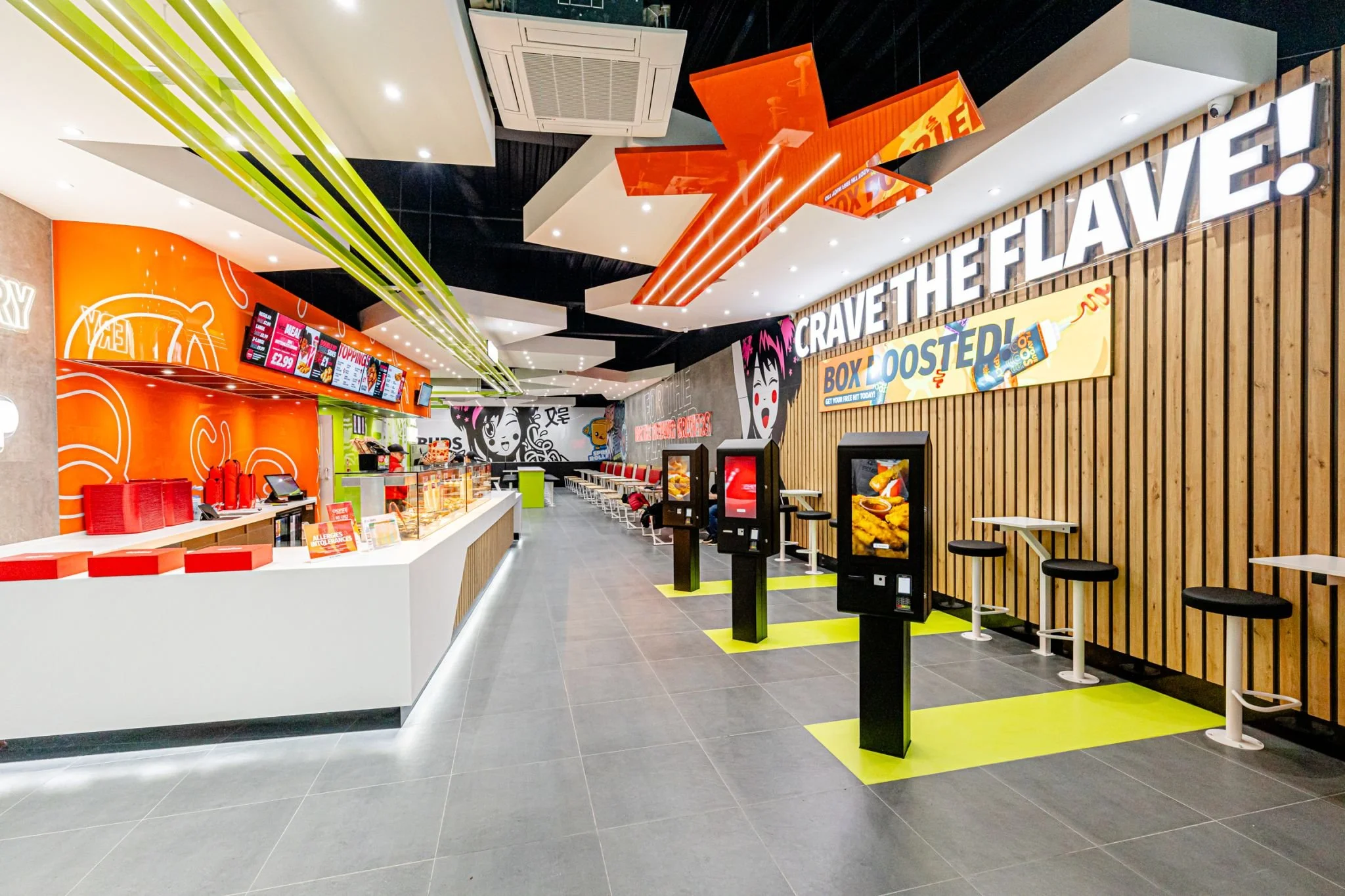
Chopstix Noodle Bars - The OG British QSR brand!
How to tap into PR to maximise your regional hospitality launch anywhere in the country.
Chopstix Noodle Bars are everywhere. They are the OG British QSR brand and we have been working with them for over three years now.
In the last year alone we opened 24 new stores, generating 98 pieces of coverage reaching 186 million eyeballs and worked with 47 top tastemakers. Most importantly we helped the business make each opening a HUGE success, smashing sales targets and quickly becoming must visits in their locations.
The brand is on a mission to take over every high street, service station and shopping centre in the UK. In the last year we have worked on PR campaigns for launches in Baker Street, Brixton, Brent Cross, Bracknell, Bristol, Oxford services, Peterborough. Luton Airport, Plymouth, Wrexham, Croydon, Blackburn, Cwmbran, Manchester Arndale and more.
Our work is a blend of regional openings and big brand campaigns to drive market penetration and build the brand’s personality with consumers.
The regional launches are fundamental in cementing a new site within the local community. How do we do this?
Regional media coverage - a campaign that raises awareness of the key opening milestones from announcement to the opening date, with a launch moment to drive queues of course.
Regional media partner - we always aim to pick one hero media title that will reach our key audience in that town or city to ensure that as many people as possible know Chopstix is coming. This is often a Reach title or someone like The Manc here in Manchester.
Influencer campaigns - the taste-makers and trend-setters who create content and influence their followers with their recommendations day in and day out.
That all important launch moment - We know that Chopstix fans love a freebie so every opening gives them the chance to grab a free taster of what is to come. By using the brands’ app we can incorporate data capture so we know who they are and can remarket to them again and again. Queues mean social media coverage and freebies give another reason for media to talk about them.
We love a bit of out of home (OOH) advertising when we can too. If you want to be budget conscious a B0 campaign is a brilliant and affordable way to take over the town - or in Chopstix’ case paint it red. They used to be primarily a vehicle for club nights but now these legal fly posters are firm favourites with bars and restaurants and are the very best way to reach your audiences as they walk around a town or city.
Want to be more Chopstix? Talk to us about your plans for 2024. Not sure you want to commit, don’t worry we can offer you a free consultation to help shape your plans first and answer any questions you might have.
What is your PR and marketing strategy as the country enters recession?
PR is a must have in trying times because it can help brands to achieve so many objectives and reach so many audiences with relatively simple tactics.
You just need to be super clear as to what you need to achieve to bring in the cash and customers.
Hospitality is a crowded market, especially in big cities like Manchester, Birmingham and Liverpool and one that is facing a fair amount of challenges right now, as consumers are spending less in the face of the cost of living crisis.
A recent release of data from the CGA RSM Hospitality Business Tracker revealed that hospitality sales were flat in January as consumer spending has been squeezed.
The tracker showed that Britain’s leading hospitality groups had an amazing December and a tricky January. Plenty of friends and clients across the industry are really seeing a challenging time, even the ones that were doing better than the majority of those in the market last year.
So what can you do?
Build excellent relationships with your local media and feed them regular stories to keep you front of mind with local audiences. From new menus to seasonal launches or the odd stunty dish - who doesn’t love a Christmas dinner burger or a chocolate pizza for Easter!
Consider a paid media partner. Pick one with the right readership to match your audience and get them creating fantastic content right away.
Influencers have huge power, especially in local markets. They have engaged followers who really do follow their advice. I know this because I buy fashion, beauty, food, nutrition products and more as a result of what my favourite influencers talk about on Instagram and Tik Tok.
Think national. National media write about regional brands and venues, not just those in London. Do your potential customers read travel mags or women’s titles or do you think they are more Jay Raynor and Sunday Times Style. Get this right and the bookings will pour in.
What about a stunt? A brilliant trick for driving queues - which drives social media buzz and media coverage - is free stuff. Everyone wants free stuff and they love talking about it on social media so pick a date, a time and get the news out there. Think about data capture if you can so that you can remarketing to these people again in the future.
Pick one tactic or do them all but make sure you have a plan, that you set some objectives, benchmark your metrics and measure them again at the end. Sales might be your ultimate objective but don’t underestimate the value of brand awareness and staying front of mind with your audiences - it still often takes 10 touch points to make a sale so you need a consistent ongoing plan to drive real change.
Not sure you can handle this yourself or just want to sense check your plans? We offer consultation or full campaign planning and delivery and will always offer a free introductory call first so give us a call.
We have done this for hundreds of regional and national brands from Crazy Pedro’s to Black Dog Ballroom, Vapiano and Shoryu Ramen and Rudy’s Pizza. We have launched over 60 Chopstix sites across the UK over the last three years, everywhere from Leicester and Blackburn, to Baker Street and the Trafford Centre here in Manchester so we know what works!
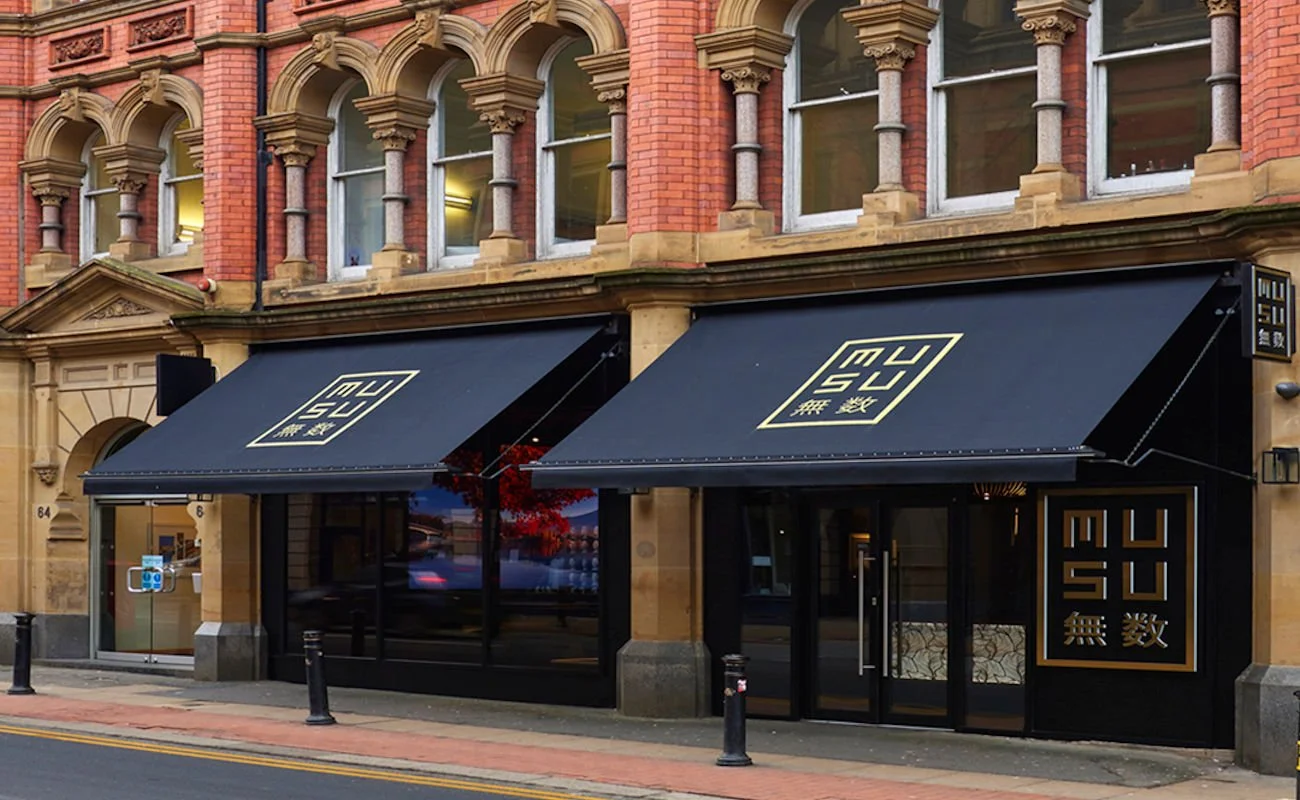
We won MUSU MCR!
We have been handed the brief to support one of Manchester’s most talked about Japanese restaurants - MUSU.
MUSU - an understated restaurant and bar on a busy street in Manchester - and one of the finest Japanese dining destinations in the UK, offers guests the chance to discover the breadth of oriental excellence from Omakase to innovative tasting menus.
Not just a meal, more of a sensory experience through a world of Japanese artistry, flavour and culture, MUSU leads its offering with a selection of tasting menus that spotlight the ingredients not found almost anywhere else in the UK.
Blue-fin Tuna, Japanese A5 Wagyu, Oscietra caviar, and Carabinero prawns are just a small selection of the produce that features across the curated seasonal menu, titled ‘Land of the Rising Sun’.
The menu, like almost everything inside its Bridge Street location, is led by Chef Patron Michael Shaw who was trained by Raymond Blanc at Oxfordshire institution Le Manoir and is a veteran of kitchens helmed by the most famous names in the industry that include Ramsey, Neat, Pierre-White and Robuchon.
Down at the Social has worked with some of the most successful hospitality brands in the UK growing their profile, building content and social networks and generating coverage in the right media titles to elevate them across the industry.
DATS has launched restaurants, bars and hotels across Manchester and the UK, working with brands such as Vapiano, HRH Hotel Group, Locke Hotel Group, Shoryu Ramen, Chopstix, Send Noods Ramen, Wood Manchester.
The account will be headed up by Orla Hickey who has 15 years experience working with high-end hospitality brands. Before joining DATS she was group communications manager at Maybourne Hotel Group where she handled PR for luxury hotels including Claridge’s in London, The Maybourne Beverly Hills, and The Maybourne Riviera in the South of France.
Daisy Whitehouse, MD at Down at the Social, said; “We love hospitality and we love to work with the very best in the industry. The team behind MUSU has an incredible passion for creating the ultimate dining experience and they really deliver. We’re really excited to be working with them to shout about the excellent food that they are serving alongside an amazing programme of events. Check out the amazing tuna cutting event.”
Ben Craven, marketing manager at MUSU, said; “I have worked with DATS in my role at Reach for many years and always found them to be the most creative, enthusiastic and professional team that have a real understanding of how to get results for their clients. It was only natural that when I came to the role at MUSU I got DATS on board to work with me to make 2024 our best year yet. We can’t wait to get started.”
HITTING THE HEADLINES: 4 REASONS YOU’RE NOT GETTING COVERAGE (AND HOW TO SOLVE THEM)
It’s fair to say that gaining media exposure and news coverage for your brand is getting harder than almost ever before. Waves of layoffs across the entire industry have been a theme of the past 12 months across the nation's media, with even the biggest publishers making significant changes to their news teams and structures. The UK’s largest news publisher, Reach, laid off nearly 500 staff, closed websites and combined print and online teams. Worldwide content machine Buzzfeed shut down its news operations after starting to publish articles completely written by AI.
With fewer journalists on staff and more stories than ever before, it’s much easier to get lost in the noise - so making sure you nail your content right out of the door is now absolutely crucial. We’ve got together our top 4 tips on how to cut through the flak and get your story into the media you need;
1. The Right Content
The single most common issue that prevents your news from being published is your content mix. A news story needs to be just that - news. While you might want to shout from the rooftops about the improvement in your sales figures or your brand new product, you need to ask yourself: Is this really news to the world or is it just news to us?
HOW TO SOLVE IT: Craft, Craft, Craft. Don’t just write that your sales are up - think about why a journalist will care. Whether you’re talking about your fantastic growth or the latest thing to market, write like you’re the reader and put yourself in the journalists place to make sure that your content is exactly what they will want to
publish.
2. Print Ready
With fewer journalists required to create more content, it’s no surprise that their time is precious. The amount of time that journalists have to review, redraft and publish pieces has fallen to just minutes, meaning that any pieces of content that need more than a couple of tweaks are likely to sit in the ‘unused’ pile forever.
HOW TO SOLVE IT: Think like a newswriter. Craft your content to line up with what a journalist will need to publish immediately, including headlines, no grammatical errors and an appropriate structure for the type of article you’re writing.
3. Timing
Similarly to getting your content print-ready, making sure that you get your timing right is also crucial to success. Even if you have the best press release the world has ever seen, if you’re issuing it at the wrong time then it’s probably dropping into the bottomless pit of emails that journalists just don’t have the time to open - so think carefully before hitting the send button.
HOW TO SOLVE IT: The best times to send over your press releases are usually weekday mornings between Tuesday-Thursday for most media titles who’s news desks operate predominantly Monday-Friday. It’s also helpful to learn your schedules for titles you’re trying to reach. For example, if you’re aiming for a page lead on a Monday morning in a major national newspaper, sending your content out to the Sunday team for a Sunday-for-Monday insertion is your best chance, so speak to your contacts and learn when is best for them.
4. Rich Content
Rich content is a journalist's best friend. One of the biggest issues that can stop a story in its tracks is a lack of quality visual content to accompany a story. Journalists are no stranger to a stock image, but even when they are appropriate, most don’t have the time to scour the internet for the right picture for your story.
HOW TO SOLVE IT: Make sure you have a bank of content ready to go that you can share with your journalists when they need it. High resolution images, video content, infographics, statistical tables - the more extra content you can give to your journalists, the more they have to work with when they’re selling the story to the
editor. Landing a good story isn’t just about creating a good piece of content, or selling at the right time - you need to make sure that you’re combining your good copy with good rich content, selling at the right time and hitting the right tone.
Get everything spot on and you’ll be swimming in coverage - so what are you waiting for?